

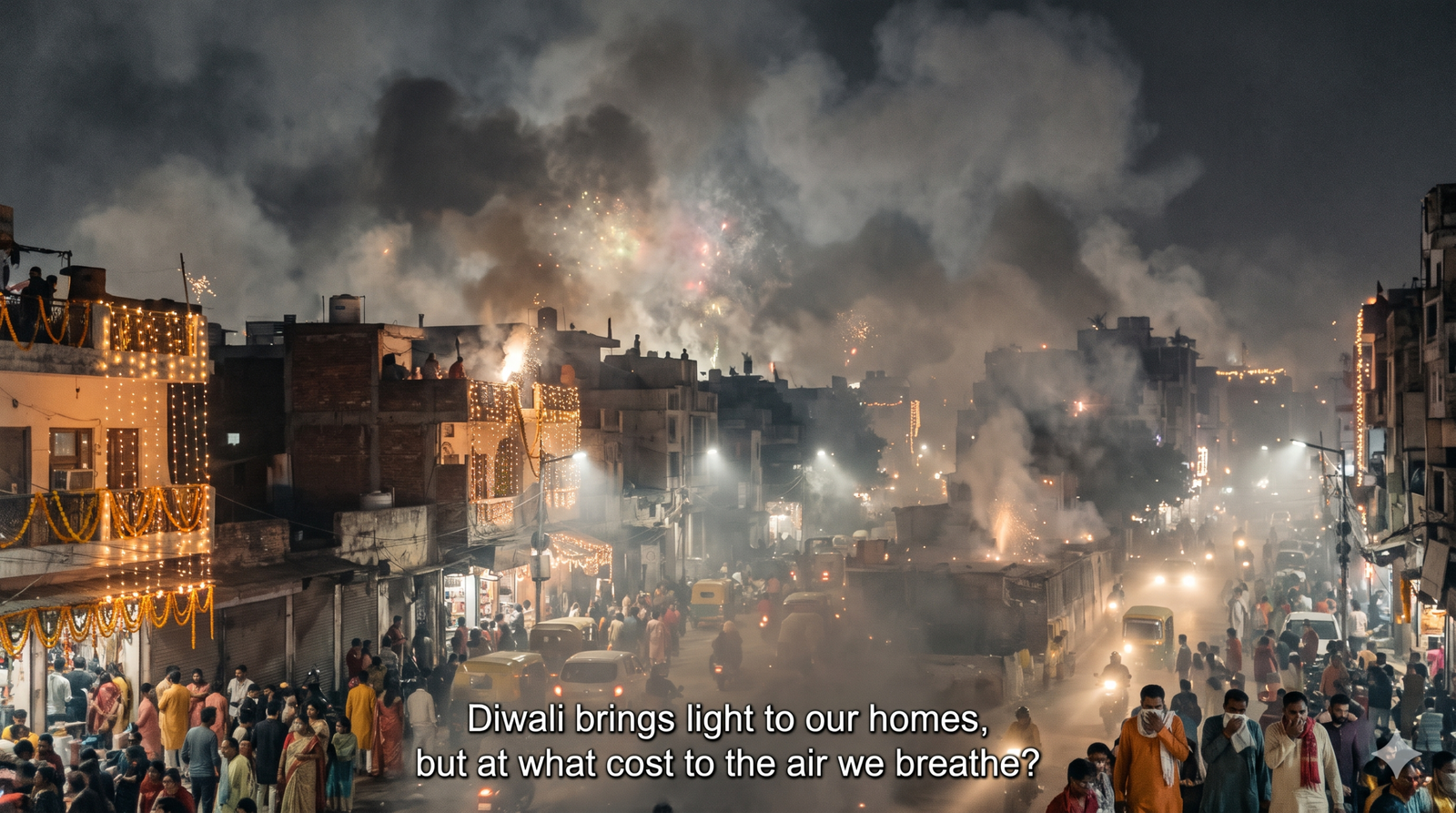
Diwali, popularly known as the Festival of Lights, is one of the most celebrated festivals in India. It represents happiness, prosperity, togetherness, and the victory of good over evil. Every year, families decorate their homes with diyas, colourful lights, rangolis, and flowers. People exchange gifts, prepare delicious sweets, and celebrate special moments with their loved ones.
However, alongside these beautiful celebrations, Diwali also brings an important environmental concern: pollution. The excessive use of firecrackers, increased vehicle movement, waste generation, and burning of materials can significantly affect air quality and the surrounding environment.
As our cities become more crowded and pollution levels continue to be a concern, it is important to rethink how we celebrate Diwali. A little awareness and a few responsible decisions can help us enjoy the festival while protecting our environment.
How Does Diwali Contribute to Pollution?
Diwali celebrations can contribute to different types of pollution. Understanding their causes is the first step towards reducing their impact.
1. Air Pollution Caused by Firecrackers
Firecrackers are one of the major sources of air pollution during Diwali. When they explode, they release smoke, fine particulate matter, and various gases into the atmosphere.
These pollutants can make the air unhealthy to breathe, particularly for children, older adults, and people with respiratory conditions. In many urban areas, pollution can become especially concerning when firecracker emissions combine with existing pollution and unfavourable weather conditions.
2. Noise Pollution
The loud sounds produced by crackers can disturb people, animals, and birds. Excessive noise may cause stress, sleep disturbances, and discomfort.
Pets and street animals are particularly vulnerable because they cannot understand the sudden loud sounds. Birds may also become frightened and disoriented during noisy celebrations.
3. Land and Waste Pollution
Diwali celebrations often generate large amounts of waste, including firecracker remains, plastic packaging, gift wrappers, disposable plates, and decorative materials.
When this waste is not collected and disposed of properly, it can make public spaces dirty and increase the burden on municipal waste management systems.
4. Environmental Impact on Animals
Animals experience festivals differently from humans. While people enjoy fireworks and celebrations, pets and street animals may experience fear due to loud explosions and bright flashes.
Responsible celebrations should consider the comfort and safety of every living being.
Health Effects of Diwali Pollution
Pollution during Diwali can affect both physical health and overall well-being.
Some possible health effects include:
- Breathing difficulties: Smoke and airborne particles can irritate the respiratory system.
- Eye irritation: Exposure to smoke and dust may cause redness, itching, and watering of the eyes.
- Throat irritation: Polluted air can lead to coughing and discomfort in the throat.
- Respiratory complications: People with asthma and other existing breathing conditions may experience worsening symptoms.
- Sleep disturbances: Excessive noise from firecrackers can interrupt sleep and cause stress.
It is important to remember that pollution does not affect everyone equally. Children, senior citizens, and people with existing health conditions may be more vulnerable.
10 Ways to Celebrate an Eco-Friendly Diwali
Celebrating Diwali responsibly does not mean giving up happiness or traditions. Instead, it means finding better ways to enjoy the festival.
1. Choose Traditional Diyas
Use traditional earthen diyas to decorate your home. They create a beautiful atmosphere and support local potters and artisans.
2. Avoid Excessive Firecrackers
Reduce or completely avoid firecracker use. Enjoy the festival through lights, music, family gatherings, and traditional celebrations.
3. Use Energy-Efficient Lights
Decorate your home with LED lights. They consume less electricity than many traditional lighting options and are available in different designs.
4. Make Natural Rangolis
Use flowers, rice flour, and other natural materials to create colourful rangolis instead of synthetic powders containing unwanted chemicals.
5. Avoid Plastic Decorations
Choose reusable decorations made from cloth, paper, wood, or other sustainable materials.
6. Celebrate with Plants and Green Gifts
Give indoor plants, saplings, or other environmentally friendly gifts to friends and family.
7. Keep Your Surroundings Clean
Dispose of waste properly and avoid throwing firecracker remains, plastic wrappers, and other garbage on roads.
8. Protect Animals and Birds
Avoid bursting crackers near animals, residential shelters, and areas where birds live. Keep pets in a comfortable and quiet environment.
9. Support Local Businesses
Purchase handmade decorations, earthen lamps, and locally produced festive products. This helps local artisans and small businesses.
10. Spread Environmental Awareness
Encourage your friends, family, and neighbours to celebrate responsibly. Even small individual efforts can create a positive collective impact.
Why Should We Promote a Green Diwali?
A green Diwali is about balancing celebrations with environmental responsibility. Our festivals are an important part of Indian culture, and protecting nature should also become an important part of our traditions.
Celebrating an eco-friendly Diwali can help:
- Reduce unnecessary air and noise pollution.
- Protect children, senior citizens, and vulnerable individuals.
- Create safer surroundings for animals and birds.
- Reduce plastic and non-biodegradable waste.
- Encourage sustainable shopping and support local artisans.
- Promote environmental awareness among future generations.
The purpose is not to reduce the excitement of Diwali but to make its happiness more meaningful and inclusive.
The Responsibility of Every Citizen
Environmental protection is not only the responsibility of the government or environmental organisations. Every individual has a role to play.
Government authorities can introduce pollution-control measures, enforce applicable restrictions, and create public awareness. However, real improvement also depends on how responsibly people celebrate.
Schools can organise awareness campaigns, residential societies can promote clean celebrations, and businesses can encourage sustainable festive practices.
When communities work together, even small changes can make a meaningful difference.
Conclusion: Let This Diwali Bring Light, Not Pollution
Diwali is a festival that teaches us about hope, positivity, and the victory of light over darkness. It is an opportunity to spend time with family, share happiness, and spread kindness.
Let us ensure that our celebrations do not come at the cost of clean air, peaceful surroundings, and environmental health.
This year, choose traditional diyas, sustainable decorations, thoughtful gifts, and responsible celebrations. Encourage others to do the same.
Remember, the true brightness of Diwali comes from the happiness we spread, not the smoke we create.
Let’s celebrate a cleaner, greener, and healthier Diwali!
About the Author
