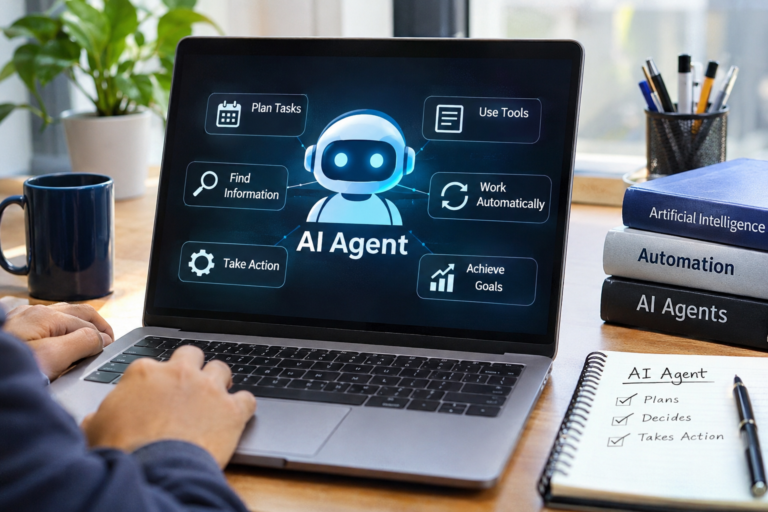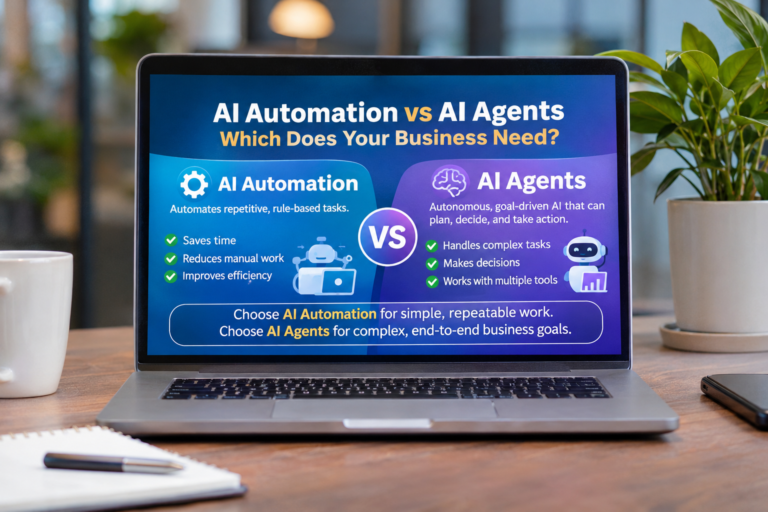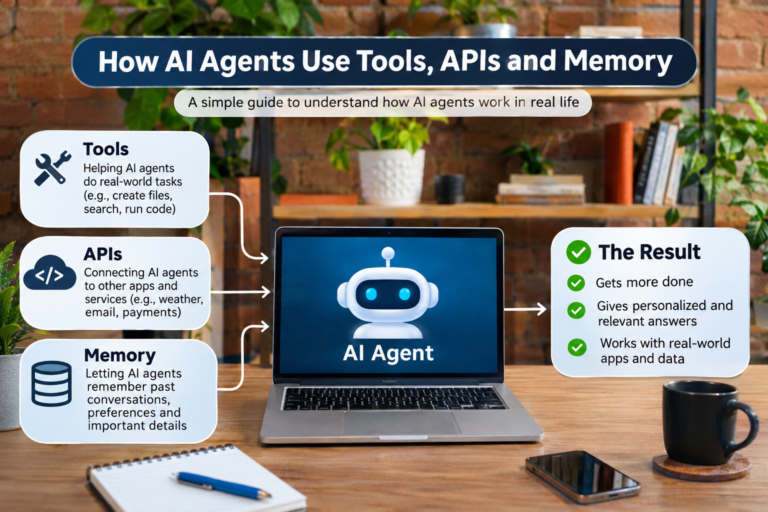

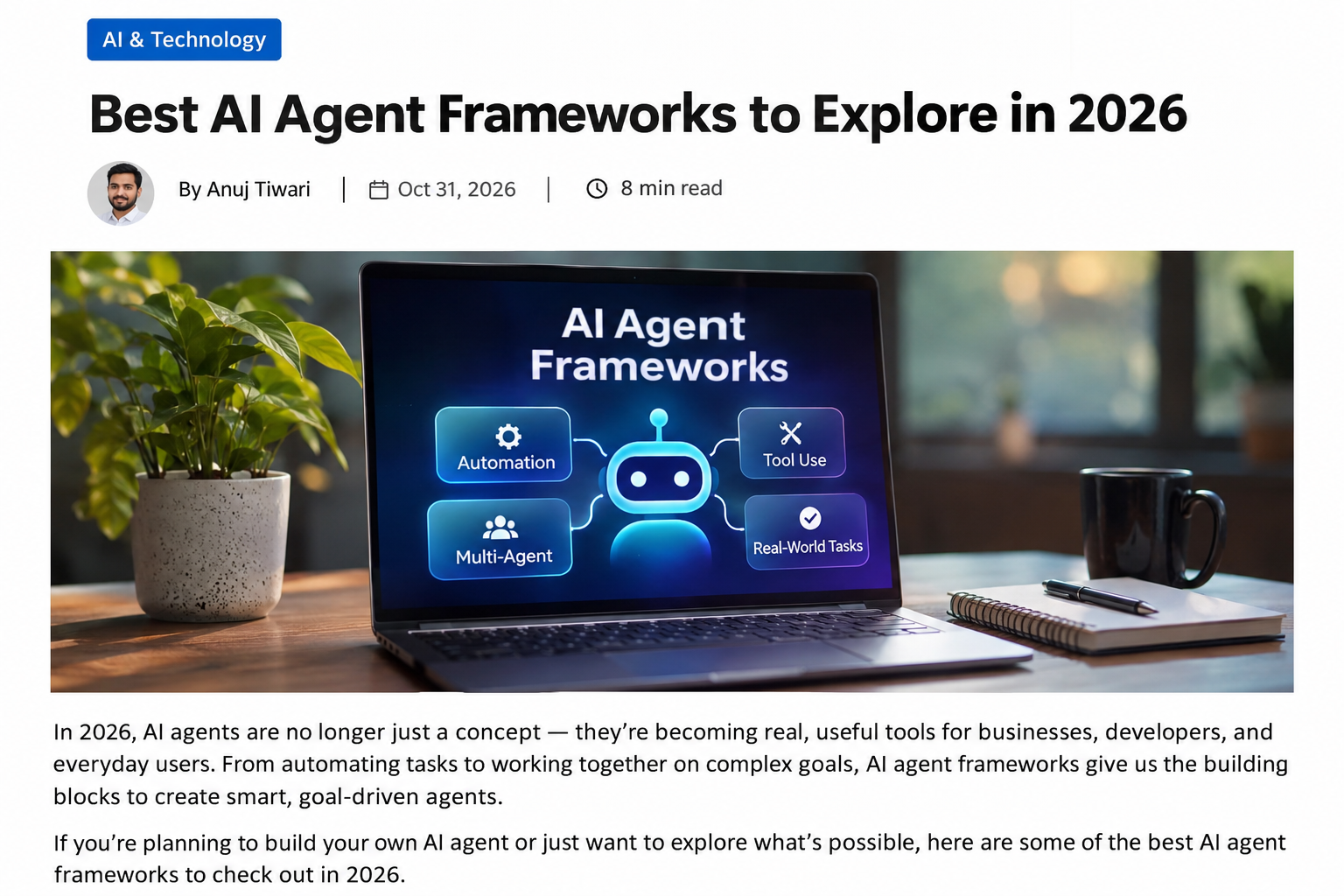
Artificial intelligence has moved well beyond answering questions and generating text. Today, AI systems can perform tasks, interact with external tools, process information, make decisions within defined boundaries, and coordinate with other AI systems.
This shift has brought AI agents into the spotlight.
Unlike traditional chatbots, AI agents can work towards a specific goal by breaking it into smaller tasks, selecting appropriate tools, processing results, and deciding what to do next.
However, building an effective AI agent requires more than connecting a language model to an API. Developers need a reliable way to manage workflows, maintain context, handle errors, integrate tools, and control how different agents communicate.
This is where AI agent frameworks become important.
In this article, we will explore some of the best AI agent frameworks to explore in 2026, understand their strengths, and look at which framework might be suitable for different development requirements.
What Is an AI Agent Framework?
An AI agent framework is a development environment or software library that helps developers build, manage, and deploy AI-powered agents.
It provides the building blocks required to create systems that can:
- Understand user instructions and objectives.
- Break complex requests into smaller tasks.
- Connect with APIs, databases, and external tools.
- Maintain conversation history and working memory.
- Coordinate multiple AI agents.
- Execute workflows with minimal human intervention.
- Request human approval when necessary.
For example, imagine building an AI-powered research assistant.
Instead of simply answering a question, the system could identify relevant topics, search for information, organize findings, prepare a summary, and present the results.
An agent framework helps developers manage this entire process.
Best AI Agent Frameworks to Explore in 2026
Here are eight frameworks worth exploring, each offering a different approach to building intelligent applications.
1. LangGraph
Best for: Complex workflows and stateful AI agents
LangGraph is one of the prominent frameworks for developers who need greater control over how AI agents operate.
It uses a graph-based approach in which individual steps are represented as nodes and the connections between them define how information moves through a workflow.
This approach is particularly useful when an AI agent needs to perform several operations, make decisions, revisit previous steps, or wait for human approval.
Key features:
- Stateful agent execution.
- Graph-based workflow management.
- Human-in-the-loop interactions.
- Checkpointing and workflow persistence.
- Support for complex multi-agent systems.
Where can it be used?
LangGraph can be useful for customer support automation, research assistants, business process automation, and applications that require long-running workflows.
Why explore it in 2026?
As AI applications become more complex, developers need predictable execution rather than relying entirely on a model to decide what happens next. LangGraph provides a structured way to build those systems.
2. CrewAI
Best for: Multi-agent collaboration
CrewAI takes a team-based approach to AI development.
Instead of making one AI agent responsible for everything, developers can create multiple agents with different roles and responsibilities.
For example, imagine building an automated content research system:
- Research Agent: Finds relevant information.
- Analysis Agent: Reviews and organizes the findings.
- Writing Agent: Prepares the first draft.
- Editing Agent: Checks the content for clarity and consistency.
These agents can collaborate through defined tasks and workflows.
Key features:
- Role-based agent creation.
- Task delegation.
- Multi-agent collaboration.
- Workflow management through Crews and Flows.
- Integration with external tools.
Where can it be used?
CrewAI is suitable for content research, business analysis, marketing automation, report preparation, and collaborative AI workflows.
Why explore it in 2026?
It offers an understandable approach to multi-agent development. Developers can organize agents around responsibilities instead of managing every operation inside one large prompt.
3. OpenAI Agents SDK
Best for: Building tool-enabled AI applications
The OpenAI Agents SDK provides developers with a relatively straightforward way to build AI agents that can use tools and hand off work to other agents.
It focuses on a few important concepts: agents, tools, handoffs, guardrails, and tracing.
For example, a business application could have one agent handling customer questions and another responsible for retrieving order information. The first agent can transfer the task when specialized assistance is required.
Key features:
- Tool integration.
- Agent handoffs.
- Guardrails for controlling agent behaviour.
- Session management.
- Execution tracing.
- Support for Python and TypeScript.
Where can it be used?
It can be used to develop customer service assistants, internal business assistants, task automation applications, and specialized AI-powered services.
Why explore it in 2026?
Its relatively focused design makes it a useful starting point for developers who want to understand how agents use tools and delegate tasks without immediately adopting a large orchestration architecture.
4. Google Agent Development Kit (ADK)
Best for: Developers working with Google Cloud
Google’s Agent Development Kit, commonly known as ADK, is designed to help developers create, test, and deploy AI agents.
It supports structured agent development and provides ways to organize different agents into more advanced workflows.
Developers working with Google’s AI ecosystem can use ADK to connect their applications with relevant Google services and models.
Key features:
- Code-first agent development.
- Multi-agent architecture.
- Workflow-oriented agents.
- Tool integration.
- Development and debugging support.
- Integration with Google’s cloud ecosystem.
Where can it be used?
ADK can be explored for enterprise assistants, customer support systems, business automation, and applications built around Google’s AI and cloud infrastructure.
Why explore it in 2026?
For developers already working with Google Cloud or Gemini, ADK provides a natural environment to experiment with agent-based applications.
5. Microsoft Agent Framework
Best for: Enterprise AI applications and Microsoft ecosystems
Microsoft Agent Framework brings together ideas from Microsoft’s earlier AutoGen and Semantic Kernel projects.
It provides development capabilities for building single-agent and multi-agent applications, including workflows that require coordination between different components.
The framework is particularly relevant for organizations already using Microsoft technologies.
Key features:
- Multi-agent orchestration.
- Workflow-based execution.
- Python and .NET support.
- Integration with Microsoft technologies.
- Human approval workflows.
- Observability and debugging capabilities.
Where can it be used?
Organizations can explore it for enterprise automation, internal knowledge assistants, document processing, and applications integrated with existing Microsoft infrastructure.
Why explore it in 2026?
Businesses often need AI systems that work alongside their existing applications and infrastructure. Microsoft Agent Framework is worth considering for teams building within that ecosystem.
6. LlamaIndex
Best for: Document-based AI applications and knowledge retrieval
Many AI applications need access to information that does not exist inside a language model’s training data.
This could include company documents, customer records, internal reports, product information, or research material.
LlamaIndex helps developers connect language models with external data sources and build applications around that information.
Its workflow capabilities also support more advanced agent-based applications.
Key features:
- Data ingestion and indexing.
- Retrieval-augmented generation (RAG).
- Document processing.
- Data source integrations.
- Agent and workflow development.
- Knowledge retrieval.
Where can it be used?
LlamaIndex is particularly useful for enterprise knowledge assistants, document search applications, research tools, and systems that answer questions using private business information.
Why explore it in 2026?
As organizations make more internal information accessible to AI applications, frameworks that connect models with reliable data sources become increasingly valuable.
7. PydanticAI
Best for: Structured and reliable Python AI applications
One challenge with AI development is that language models do not always return information in the exact format an application expects.
PydanticAI addresses this challenge by bringing structured validation and Python’s type system into agent development.
It helps developers define the expected inputs and outputs of their AI applications.
For example, an AI agent that processes customer enquiries might need to return a customer name, enquiry category, priority level, and recommended action in a predefined structure.
PydanticAI helps make this process more predictable.
Key features:
- Type-safe agent development.
- Structured outputs.
- Input and output validation.
- Model-provider flexibility.
- Tool integration.
- Support for production-oriented applications.
Where can it be used?
It can be explored for business automation, structured data extraction, API-powered applications, and applications where predictable output formats are important.
Why explore it in 2026?
Reliable AI applications need more than impressive responses. They also need outputs that software systems can validate and process.
8. Mastra
Best for: TypeScript and JavaScript developers
Mastra is an AI development framework designed with the JavaScript and TypeScript ecosystem in mind.
It offers tools for creating agents, managing workflows, working with memory, and building applications that use AI capabilities.
This makes it interesting for full-stack developers who want to incorporate agent-based functionality into existing web applications.
Key features:
- TypeScript-first development.
- AI agent creation.
- Workflow management.
- Memory capabilities.
- Retrieval and tool integrations.
- Development and testing tools.
Where can it be used?
Mastra can be useful for web-based AI assistants, SaaS products, customer-facing applications, and workflow automation systems.
Why explore it in 2026?
Not every AI developer works primarily with Python. Mastra provides a practical option for teams building AI-powered products using JavaScript and TypeScript.
AI Agent Frameworks Comparison
Choosing a framework becomes easier when you compare the technologies based on their primary strengths.
| Framework | Primary Strength | Suitable For |
|---|---|---|
| LangGraph | Stateful workflows | Complex AI applications |
| CrewAI | Agent collaboration | Multi-agent systems |
| OpenAI Agents SDK | Tools and handoffs | AI assistants |
| Google ADK | Agent development ecosystem | Google Cloud applications |
| Microsoft Agent Framework | Enterprise orchestration | Microsoft-based systems |
| LlamaIndex | Data retrieval | Document-based AI |
| PydanticAI | Structured validation | Reliable Python applications |
| Mastra | TypeScript development | Full-stack AI products |
The best option depends on your technical requirements, programming language, infrastructure, and the level of control you need.
How to Choose the Right AI Agent Framework
Before selecting a framework, consider what you actually want to build.
Here are a few practical considerations.
1. Identify your project requirements
Start by defining the purpose of your AI application. A simple customer support assistant may not require the same architecture as a system coordinating several specialized agents.
2. Consider your programming language
If you primarily work with Python, frameworks such as LangGraph, CrewAI, and PydanticAI are worth exploring.
For TypeScript developers, Mastra and the OpenAI Agents SDK are useful options.
3. Check model compatibility
Some frameworks have deeper integrations with particular AI ecosystems. If you want the flexibility to switch between model providers, examine their supported integrations before making a decision.
4. Think about scalability
An application that works well during development may behave differently when multiple users start interacting with it.
Consider execution reliability, memory management, monitoring, error handling, and deployment requirements.
5. Evaluate security and control
AI agents may interact with databases, APIs, and business applications. Make sure the framework supports appropriate access controls, tool restrictions, approval mechanisms, and monitoring.
Are AI Agent Frameworks Worth Learning in 2026?
Yes, particularly for developers interested in building practical AI applications.
Understanding agent frameworks introduces several important development concepts:
- API and tool integration.
- Large language model interaction.
- Workflow automation.
- Multi-agent communication.
- Retrieval-augmented generation.
- Memory and context management.
- Application deployment and monitoring.
These concepts are useful beyond any single framework.
However, learning a framework without understanding the fundamentals of programming, APIs, databases, and language models can make development difficult.
A strong foundation will help you understand why a particular framework is useful instead of simply following tutorials.
A Practical Learning Roadmap for Beginners
If you are starting your AI agent development journey, consider following this learning sequence.
Step 1: Learn Python or TypeScript
Understand variables, functions, classes, error handling, modules, and basic software development practices.
Step 2: Understand APIs and LLMs
Learn how applications communicate with AI models through APIs. Explore prompts, tokens, context windows, and structured outputs.
Step 3: Build a basic AI assistant
Create a simple assistant that can respond to questions and interact with one external tool.
Step 4: Explore an agent framework
Start with the OpenAI Agents SDK or PydanticAI for a focused introduction. Move towards LangGraph when you need more control over complex workflows.
Step 5: Experiment with multiple agents
Create a small project where two or three agents have separate responsibilities and exchange information.
Step 6: Build and deploy a real project
Try developing a research assistant, document question-answering system, or automated customer support application.
Working on a real project will teach you more about practical limitations than simply reading documentation.
Final Thoughts
AI agent development is becoming an important part of modern software engineering. Frameworks such as LangGraph, CrewAI, OpenAI Agents SDK, Google ADK, Microsoft Agent Framework, LlamaIndex, PydanticAI, and Mastra provide different approaches to building intelligent applications.
There is no universal winner.
If you need complex workflow control, LangGraph is worth exploring. If you want to experiment with teams of AI agents, CrewAI is a strong starting point. For structured Python applications, consider PydanticAI. Meanwhile, developers building within specific ecosystems may find Google ADK, Microsoft Agent Framework, or Mastra more suitable.
The most valuable skill is not simply knowing how to use one framework. It is understanding how to design AI systems that solve real problems, work reliably, and provide measurable value.
Start with one framework, build something useful, and expand your knowledge as your projects become more advanced.
Frequently Asked Questions (FAQs)
1. What is the best AI agent framework in 2026?
There is no single best framework. LangGraph is worth considering for complex workflows, CrewAI for multi-agent collaboration, and the OpenAI Agents SDK for tool-enabled assistants.
2. Which AI agent framework is best for beginners?
The OpenAI Agents SDK and CrewAI are reasonable starting points. PydanticAI is another good option for developers who already understand Python.
3. Do I need Python to build AI agents?
No. Python is widely used for AI development, but TypeScript and JavaScript developers can also explore frameworks such as Mastra and the OpenAI Agents SDK.
4. What is the difference between LangChain and LangGraph?
LangChain provides components and abstractions for developing language-model applications. LangGraph focuses on orchestrating stateful, multi-step agent workflows with more explicit control over execution.
5. Can multiple AI agents work together?
Yes. Multi-agent frameworks allow developers to assign different responsibilities to agents and coordinate their work through tasks, messages, and workflows.
6. Are AI agent frameworks free?
Many frameworks provide open-source versions, but using them may still involve costs for model APIs, cloud infrastructure, hosting, monitoring, and other services.
7. What should I build to practise AI agent development?
Start with a research assistant, document analysis tool, customer support assistant, or multi-agent content research application. These projects introduce practical concepts such as tool usage, memory, retrieval, and workflow coordination.
About the Author