
Meta Title: Can AI Agents Run a Business? Realistic Uses and Limitations
Meta Description: Discover how AI agents can manage business operations, automate daily tasks, support customers, increase productivity, and where human involvement is still essential.
Suggested URL Slug: can-ai-agents-run-a-business
Category: Artificial Intelligence / AI Agents
Focus Keyword: Can AI agents run a business?
Related Keywords: AI agents for business, AI business automation, autonomous AI agents, AI-powered business operations, AI agents for small businesses.
Introduction
Imagine starting your workday and finding that most of your routine business tasks have already been completed. Customer enquiries have received responses, new leads have been organized, marketing reports are ready, and pending invoices have been identified.
You did not personally handle every task. Instead, a team of AI agents worked in the background.
This is no longer just an idea from science fiction. AI agents are becoming practical tools for businesses, helping companies automate repetitive work, manage information, communicate with customers, and coordinate different operations.
But an important question remains: Can AI agents actually run an entire business without human involvement?
The answer is more complicated than a simple yes or no.
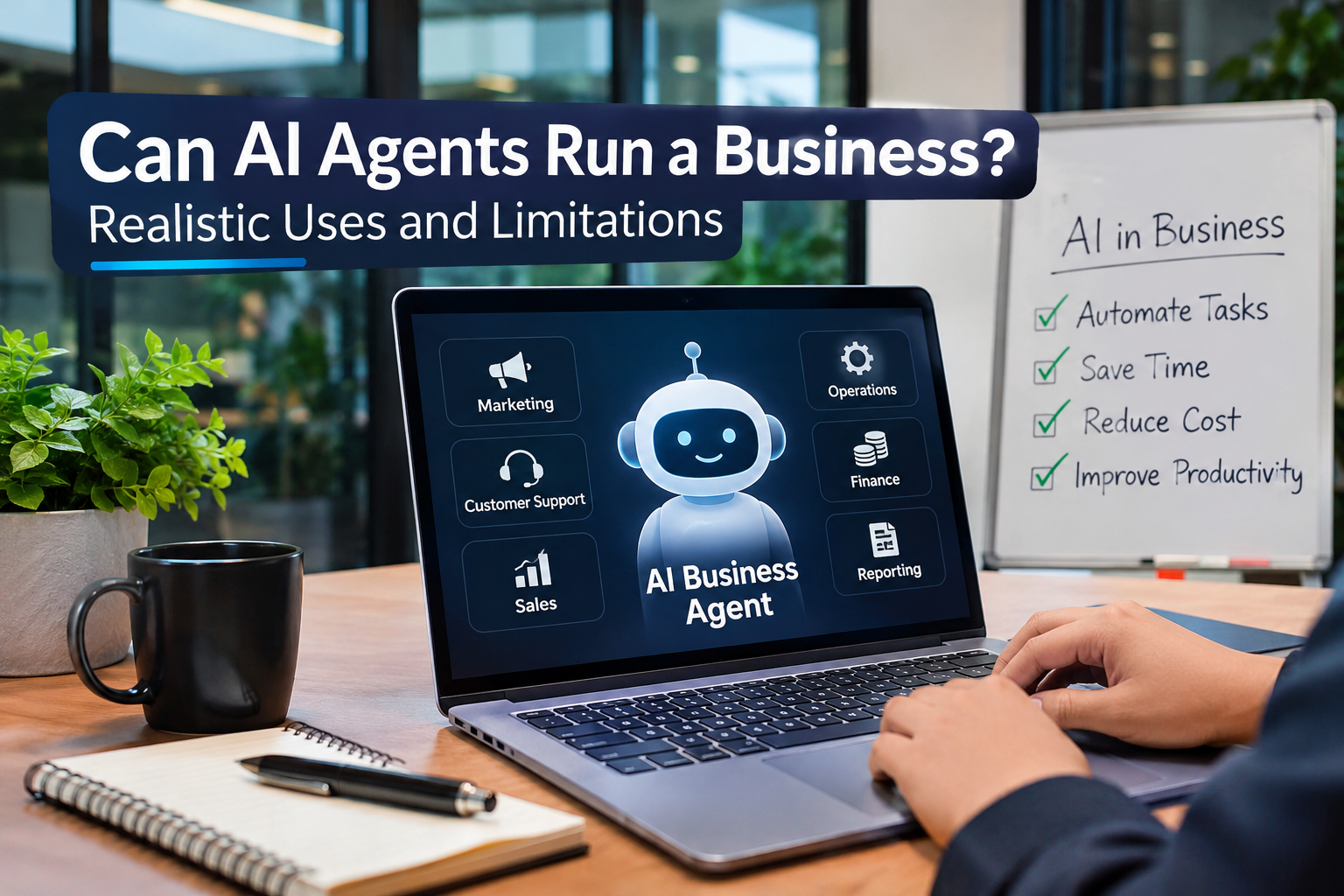
AI agents can already manage several business activities with limited supervision. However, running an entire company requires more than completing tasks. It involves making strategic decisions, understanding people, managing money, handling unexpected situations, and taking responsibility for important outcomes.
In this article, we will explore what AI agents can realistically do for businesses, where they are useful, and why human involvement still matters.
1. What Are AI Agents in Business?
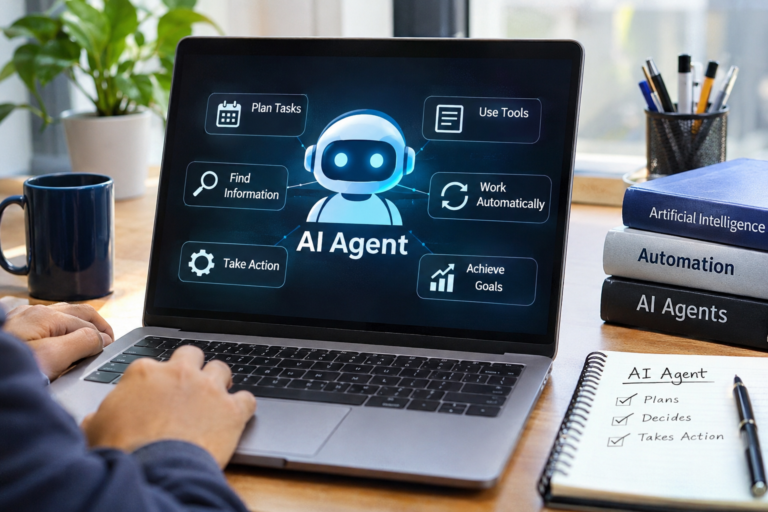
AI agents are software systems designed to understand goals, make decisions, use available tools, and perform tasks to achieve specific outcomes.
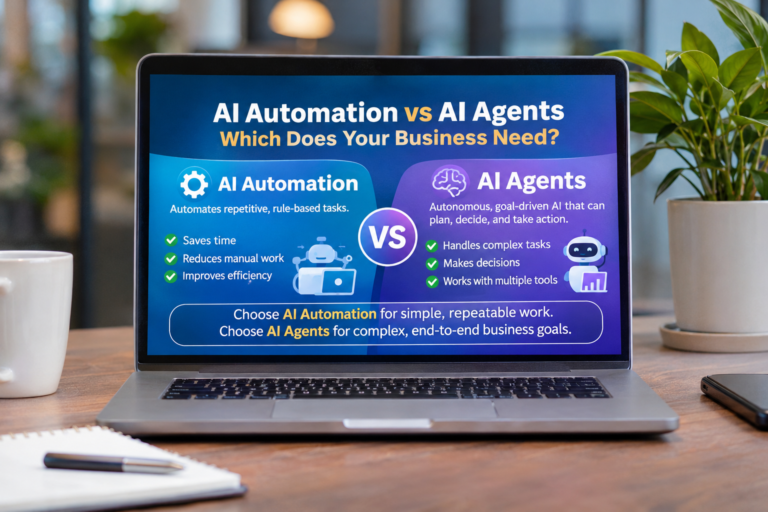
Unlike traditional automation, which generally follows predefined instructions, AI agents can work through changing situations and select different actions depending on the information they receive.
For example, consider an online shopping business.
A traditional automation system might send an order confirmation whenever a customer purchases something.
An AI agent could perform a much broader sequence of activities:
- Check incoming customer orders.
- Identify unusual order details.
- Answer questions about products.
- Check inventory availability.
- Prepare customer support responses.
- Notify the relevant team about delayed deliveries.
- Generate a daily sales summary.
When multiple AI agents work together, they can support different departments of the same business.
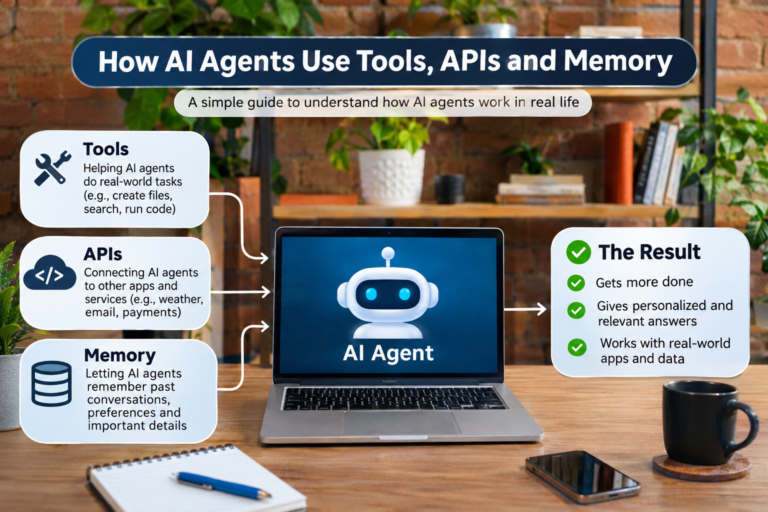
The important difference is that AI agents do not simply generate answers. They can also take actions through connected applications, APIs, databases, and business software.
2. How Can AI Agents Run Different Business Departments?
One of the most interesting possibilities of AI agents is their ability to support multiple business functions.
Instead of depending on one general-purpose AI system, businesses can deploy specialized agents for different responsibilities.
Najlepšie AI Agent Buildery pre vaše podnikanie | Post Affiliate Pro
Let’s understand how this could work.
A. AI Agents for Marketing
Marketing involves several repetitive activities, including content research, campaign planning, social media management, and performance analysis.
AI agents can help with:
- Finding relevant content topics.
- Researching industry trends.
- Preparing blog outlines and drafts.
- Creating social media content.
- Organizing marketing campaigns.
- Analysing campaign performance.
- Identifying opportunities to improve engagement.
For example, a marketing agent could review website traffic reports and identify which blog topics attract the most visitors.
It could then prepare suggestions for future content.
However, creative direction, brand positioning, and final approval should remain under human supervision.
B. AI Agents for Sales
Sales teams spend considerable time finding potential customers, managing leads, and following up on enquiries.
An AI sales agent can help automate several of these activities.
Its responsibilities may include:
- Collecting information about potential customers.
- Organizing leads in a CRM.
- Sending approved follow-up messages.
- Answering basic product questions.
- Scheduling sales meetings.
- Preparing sales performance reports.
For example, when someone submits an enquiry through a company’s website, an AI agent could collect the details, identify the customer’s requirements, and assign the lead to the appropriate salesperson.
This reduces manual work and helps sales teams respond faster.
C. AI Agents for Customer Support
Customer support is one of the most practical applications of AI agents.
Businesses receive similar questions every day regarding pricing, orders, delivery, refunds, and product information.
An AI support agent can:
- Answer frequently asked questions.
- Check order information.
- Explain product features.
- Guide customers through common problems.
- Create support tickets.
- Forward complicated cases to human representatives.
The biggest advantage is availability. AI agents can handle routine enquiries outside normal business hours.
However, sensitive complaints, unusual refund requests, and emotionally difficult conversations may require a human representative.
D. AI Agents for Finance and Accounting
Financial operations require accuracy and careful monitoring.
AI agents can assist finance teams by:
- Organizing invoices.
- Extracting information from financial documents.
- Identifying overdue payments.
- Categorizing expenses.
- Preparing financial summaries.
- Highlighting unusual transactions.
For instance, an AI agent could review pending invoices every morning and prepare a report showing which customers have outstanding payments.
However, approving major payments, making investment decisions, and handling tax-related responsibilities should involve qualified human professionals.
E. AI Agents for Business Operations
Operations include the everyday activities required to keep a company functioning.
AI agents can support these processes through:
- Monitoring task completion.
- Tracking project deadlines.
- Organizing internal information.
- Preparing daily reports.
- Identifying workflow delays.
- Coordinating routine activities between departments.
This can be particularly useful for small businesses that cannot afford large administrative teams.
3. Can Multiple AI Agents Work Together to Manage a Business?
Yes. This is where multi-agent AI systems become especially interesting.
Instead of using one AI agent for everything, a business can create several specialized agents that communicate and coordinate their work.
Designing AI Agents That Scale Across Enterprise Departments
Imagine a small online business with the following AI agents:
| AI Agent | Main Responsibility |
|---|---|
| Marketing Agent | Content and marketing campaigns |
| Sales Agent | Lead management and follow-ups |
| Customer Support Agent | Customer enquiries |
| Finance Agent | Invoice tracking and reporting |
| Operations Agent | Task and workflow management |
| Manager Agent | Coordination and progress summaries |
Here is a simple example.
A customer visits an online store and places an order.
- The sales agent records the order.
- The operations agent checks inventory and delivery information.
- The customer support agent prepares an order confirmation.
- The finance agent records the transaction.
- The manager agent includes the completed order in the daily business report.
Each agent handles a specific responsibility.
This approach can reduce the need for employees to manually transfer information between different systems.
However, the agents must have clearly defined responsibilities, reliable communication channels, and appropriate permissions.
4. Realistic Examples of Businesses That Can Use AI Agents
AI agents are not equally useful for every type of business. Their effectiveness depends on how much of the company’s work involves structured information and repeatable processes.
Here are some practical examples.
1. E-commerce Businesses
An online store can use AI agents to manage several daily activities.
For example:
- Responding to product enquiries.
- Tracking customer orders.
- Monitoring stock levels.
- Preparing product descriptions.
- Organizing customer feedback.
- Identifying frequently returned products.
Human employees can focus on product quality, supplier relationships, and business growth.
2. Digital Marketing Agencies
Marketing agencies often manage multiple clients and campaigns simultaneously.
AI agents can help with:
- Keyword research.
- Competitor analysis.
- Content preparation.
- Social media scheduling.
- Campaign reporting.
- Website performance monitoring.
An agency could use separate agents for SEO, content, social media, and reporting.
Human marketers would still be responsible for strategy, creative quality, and client relationships.
3. Software Development Companies
Software companies can use AI agents to assist development teams.
Possible applications include:
- Reviewing code.
- Identifying potential bugs.
- Writing documentation.
- Generating test cases.
- Monitoring application errors.
- Organizing development tasks.
AI coding agents can speed up development, but experienced developers are still needed to review architecture, security, and production changes.
4. Educational Businesses
Online education companies can use AI agents to manage routine activities.
For example:
- Answering course-related questions.
- Helping students find learning materials.
- Sending class reminders.
- Organizing course enquiries.
- Preparing student progress summaries.
Teachers and instructors remain important for mentoring, evaluation, and personalized guidance.
5. Real Estate Businesses
Real estate agencies receive enquiries from people looking to buy, sell, or rent properties.
AI agents can help by:
- Collecting customer requirements.
- Organizing property enquiries.
- Suggesting relevant listings.
- Scheduling property visits.
- Sending follow-up messages.
- Preparing market summaries.
However, property negotiations, legal verification, and final agreements require human involvement.
5. What Can AI Agents Do Without Human Help?
It is important to separate tasks that AI agents can handle independently from activities that require supervision.
The following table provides a realistic overview.
| Business Activity | AI Capability | Human Involvement |
|---|---|---|
| Answering FAQs | High | Low |
| Organizing leads | High | Low |
| Preparing reports | High | Medium |
| Drafting marketing content | High | High for approval |
| Scheduling meetings | High | Low |
| Managing invoices | Medium–High | Medium |
| Customer complaints | Medium | High |
| Financial decisions | Limited | Essential |
| Business strategy | Limited | Essential |
| Legal decisions | Limited | Essential |
The level of independence also depends on the quality of the AI model, available business data, integrations, and safeguards.
An agent might successfully handle hundreds of routine enquiries but struggle with one unusual situation that requires judgment or negotiation.
6. The Major Limitations of AI Agents in Business
Although AI agents offer significant opportunities, businesses should understand their limitations before depending on them.
🧠 From Data to Action: Why Decision Intelligence Is Becoming a Business Essential
A. AI Agents Can Make Mistakes
AI agents do not always understand information correctly.
They may generate incorrect answers, misunderstand instructions, or take inappropriate actions.
For example, a customer support agent might provide outdated information about a company’s refund policy.
If the system is not properly configured, this mistake could create customer dissatisfaction.
Businesses should implement verification processes for important actions.
B. They Cannot Fully Replace Human Judgment
Running a business involves decisions that cannot always be made using available data.
Consider a situation where a long-term customer is experiencing financial difficulties and requests additional time to pay an invoice.
An AI agent might follow the company’s standard payment policy, but a human manager may consider the customer’s history and make an exception.
Human judgment remains valuable in situations involving trust, empathy, negotiation, and responsibility.
C. Data Privacy and Security Risks
AI agents often need access to business information to perform their tasks.
This may include:
- Customer contact details.
- Sales records.
- Financial documents.
- Internal company information.
- Employee records.
Giving an AI agent unnecessary access can create serious security risks.
Businesses should follow the principle of least privilege, meaning each agent should only receive access to the information and tools required for its responsibilities.
D. Integration Can Be Difficult
An AI agent is only useful when it can access the systems needed to complete its work.
For example, an e-commerce agent may need connections to:
- The company’s website.
- Inventory software.
- Payment systems.
- Customer relationship management software.
- Shipping platforms.
Integrating these applications can require technical expertise.
Poor integrations can lead to incomplete information, duplicate actions, and operational problems.
E. AI Agents Can Increase Business Costs
Some people assume that using AI agents means running a business almost for free.
That is not necessarily true.
Businesses may need to pay for:
- AI model usage.
- Automation platforms.
- API integrations.
- Cloud infrastructure.
- Software subscriptions.
- Security and monitoring.
- Technical maintenance.
A well-designed AI system can reduce operational expenses, but its total cost should be compared with the actual value it creates.
F. Accountability Is Still a Human Responsibility
Perhaps the biggest limitation is accountability.
If an AI agent sends an incorrect payment, shares confidential information, or makes a mistake that affects a customer, the business cannot simply blame the AI.
The company and its responsible people must establish who can authorize actions, investigate problems, and correct mistakes.
7. How to Start an AI-Powered Business
You do not need to automate an entire company on the first day.
A better approach is to begin with a small workflow and gradually expand.
AI Agent Startup Ideas 2026: 27 Ranked, 15 Worth Building
Here is a practical starting process.
Step 1: Identify Repetitive Tasks
Look at your daily business activities.
Find tasks that consume time but do not require complex human judgment.
Examples include answering common questions, preparing reports, and organizing leads.
Step 2: Choose the Right AI Agent
Select an AI agent or platform based on the task you want to automate.
Some popular technologies worth exploring include:
- OpenAI – AI models and agent-building tools.
- Google – AI models and cloud-based AI services.
- Microsoft – AI tools and business integrations.
- LangChain – Frameworks for building AI applications and agents.
- n8n – Workflow automation with AI integrations.
- CrewAI – Framework for coordinating multiple AI agents.
Step 3: Connect Business Tools
Connect your agent to the applications it needs.
For example, a customer support agent might need access to a product database and a support ticket system.
Start with read-only permissions wherever possible.
Step 4: Define Clear Responsibilities
Every agent should have a specific role.
Avoid giving one agent unlimited access to every business operation.
For example, a marketing agent should not independently approve financial transactions.
Step 5: Test Before Launching
Run the system with sample tasks.
Check whether the agent provides accurate responses, follows instructions, and handles unexpected situations.
Step 6: Monitor Its Performance
Track measurable results such as:
- Time saved.
- Number of successfully completed tasks.
- Customer satisfaction.
- Operational costs.
- Error rates.
Use these results to improve the system.
8. Will AI Agents Replace Business Owners and Employees?
AI agents will likely change how businesses operate, but replacing every business owner or employee is a different matter.
A business owner does much more than manage daily tasks.
They build relationships, identify opportunities, understand customers, negotiate with partners, manage risks, and decide the future direction of the company.
AI can support these responsibilities, but it does not automatically take over the human responsibility behind them.
The more realistic future is a combination of human employees and AI agents working together.
For example, a small business with five employees might use AI agents to handle routine administration, customer enquiries, research, and reporting.
The employees can then spend more time on activities that directly contribute to business growth.
This could allow smaller companies to operate more efficiently without immediately expanding their workforce.
9. What Will the Future of AI-Powered Businesses Look Like?
The role of AI agents is likely to expand as models, integrations, and security systems improve.
We may see businesses operating with several specialized agents that coordinate activities across departments.
For example, an AI-powered company could have:
- An agent monitoring customer demand.
- An agent preparing marketing campaigns.
- An agent managing customer communication.
- An agent analysing sales performance.
- An agent monitoring inventory.
- An agent preparing financial reports.
A human manager could review the overall performance and approve important decisions.
The biggest change may not be that AI agents replace entire companies. Instead, businesses may become capable of handling more work with smaller teams and better-connected systems.
However, this future will depend on reliability, security, regulation, and whether businesses can demonstrate that automation actually improves their operations.
10. Final Verdict: Can AI Agents Really Run a Business?
So, can AI agents run a business?
Yes, AI agents can manage many individual business operations, but running an entire business independently is still beyond what most companies should safely rely on today.
They are particularly useful for repetitive tasks, information management, customer support, reporting, marketing assistance, and coordinating workflows.
However, human involvement remains essential for strategic decisions, financial responsibility, legal matters, customer relationships, and unexpected situations.
The smartest approach is not to remove humans from business operations. It is to allow AI agents to handle repetitive work while people focus on decisions that require experience, creativity, and judgment.
Businesses that learn how to combine human expertise with AI capabilities may gain a significant advantage in the coming years.
Ultimately, the future of business is not necessarily human versus AI. It is about how effectively both can work together.
Frequently Asked Questions (FAQs)
1. Can AI agents run a business without employees?
AI agents can handle several business operations without constant employee involvement. However, a completely employee-free business is difficult to operate reliably because important decisions, accountability, and unexpected situations still require human oversight.
2. Can I start a business using only AI agents?
You can use AI agents to build and manage many parts of a business, including marketing, customer support, research, and administration. However, you will still need to handle business registration, financial responsibilities, customer relationships, and important decisions.
3. Which AI agents are best for small businesses?
The right solution depends on the business requirements. Tools such as OpenAI’s agent-building technologies, n8n, CrewAI, and LangChain are worth exploring for different automation and agent-development needs.
4. Can AI agents make money for a business?
AI agents can contribute to revenue by helping businesses respond to leads faster, improve customer service, support marketing, and reduce repetitive work. However, they do not guarantee sales or profits.
5. Are AI agents expensive to operate?
Costs vary depending on the AI model, number of tasks, integrations, infrastructure, and usage. Small businesses can start with limited workflows before investing in larger AI systems.
6. Will AI agents replace managers?
AI agents may automate some management activities, such as reporting, task tracking, and workflow coordination. However, human managers remain important for leadership, decision-making, employee relationships, and accountability.
7. What is the difference between AI automation and AI agents?
Traditional automation usually follows predefined rules and workflows. AI agents can interpret goals, make context-based decisions, use tools, and adapt their actions to changing situations.
About the Author